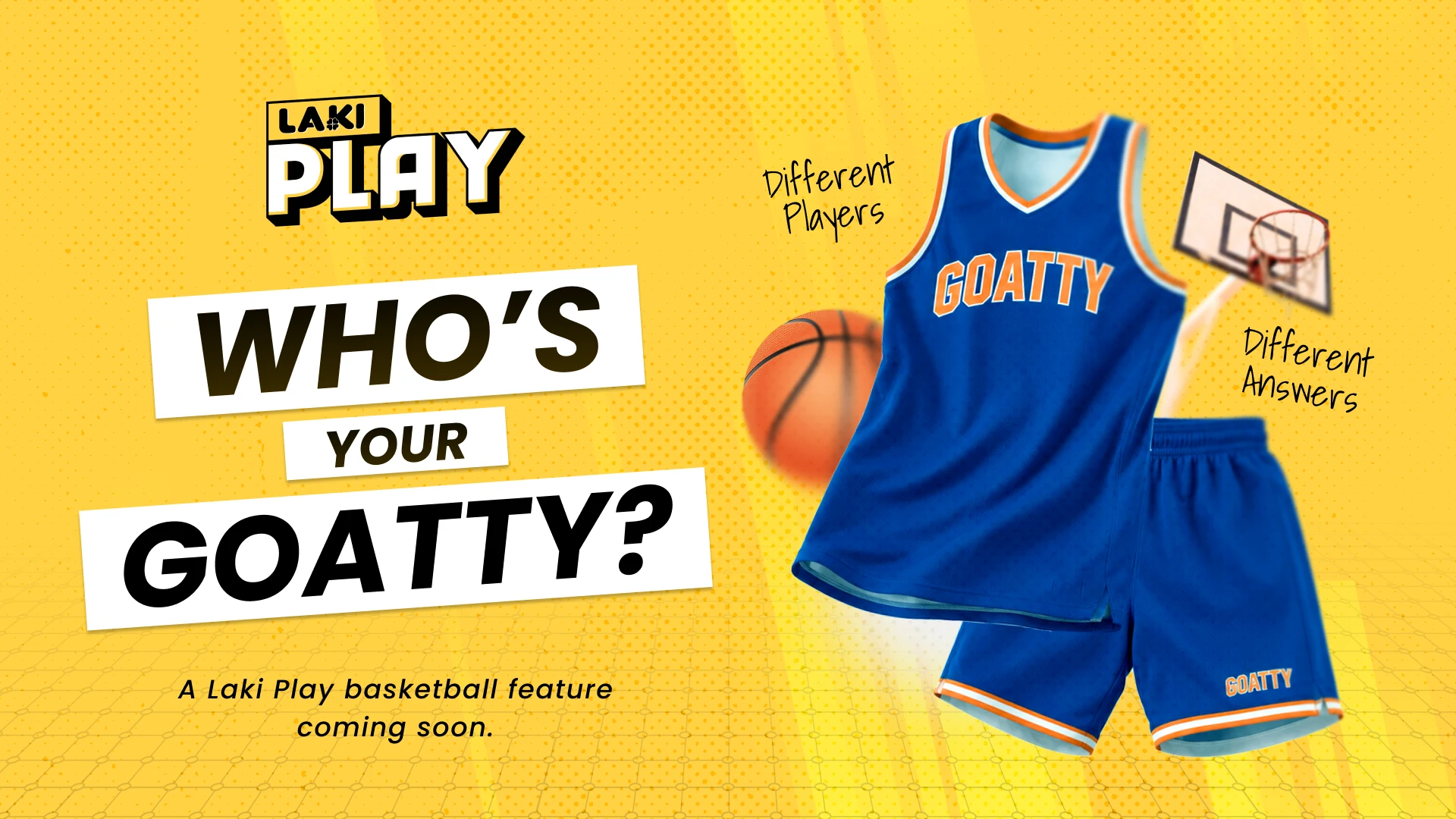
Every basketball fan knows the debate.
Who’s the GOAT?
It is one of those questions that can start a conversation, divide a group chat, and keep fans arguing long after the final buzzer.
For some, greatness is about championships. For others, it is about numbers, consistency, clutch moments, longevity, or simply the player who made them love the game.
That culture of basketball debate is exactly where Goatty comes from.
The name is inspired by one of the most familiar terms in sports: GOAT… Greatest of All Time.
But Goatty is not here to decide who the greatest player is.
He represents the people having the conversation.
The fans.
The ones watching every possession, checking the box score, comparing stats, celebrating big performances, and defending their favorite players.
That is Goatty.
The idea behind Goatty starts with basketball itself.
“GOAT” has become part of the language of sports fans around the world. It appears in conversations about legendary players, career achievements, record-breaking performances, and unforgettable moments.
In basketball, there is always another comparison.
Another stat.
Another highlight.
Another player making a case.
That energy is what Goatty represents.
He was created as a recognizable character for the Laki Play community — one that naturally belongs around basketball conversations, player performances, statistics, game reactions, and sports content.
Goatty is not separate from the game.
He is built around it.
Goatty does not represent one specific athlete.
He represents the fan watching them.
The fan reacting when a player catches fire.
The fan checking the numbers after a big game.
The fan saying, “Grabe yung laro.”
The fan joining the debate about who played better, who delivered when it mattered, and who deserves to be called the greatest.
That is why Goatty works as a representation of Laki Play users and fans.
He reflects the way people naturally experience basketball — through opinions, numbers, reactions, loyalty, and conversation.
He is the fan in character form.
Ask ten basketball fans who the GOAT is and you may get ten different answers.
That is part of what makes the conversation interesting.
Some fans look at championships.
Some look at individual records.
Some value consistency and longevity.
Some remember one unforgettable playoff run.
Others simply support the player they grew up watching.
There is no single way to define greatness, just as there is no single way to be a basketball fan.
That is one of the ideas Goatty represents.
The point is not that one character is “the greatest.”
The point is that every fan has their own GOAT.
And every fan brings a different perspective to the game.
Sports communities are built around shared moments.
The big games.
The close finishes.
The hot streaks.
The comeback wins.
The stats everyone wants to talk about the next day.
The debates that continue long after the scoreboard stops.
Goatty gives Laki Play a familiar face within those conversations.
His personality is expressive and recognizable, but his identity remains rooted in basketball culture and the sports community around it.
When Goatty appears, he represents the energy of the fans following the game, talking about the game, and keeping the conversation going.
At the end of the day, Goatty is a representation of the Laki Play sports community.
He follows the game.
He checks the stats.
He reacts to the big moments.
He has his favorites.
He joins the debate.
And like every basketball fan, he has an answer when someone asks:
Who’s your GOAT?
That is what Goatty stands for, a familiar face inspired by one of the most recognizable terms in sports and shaped by the energy, passion, and conversations of basketball fans.
Goatty is built for the game and made for the fans.